


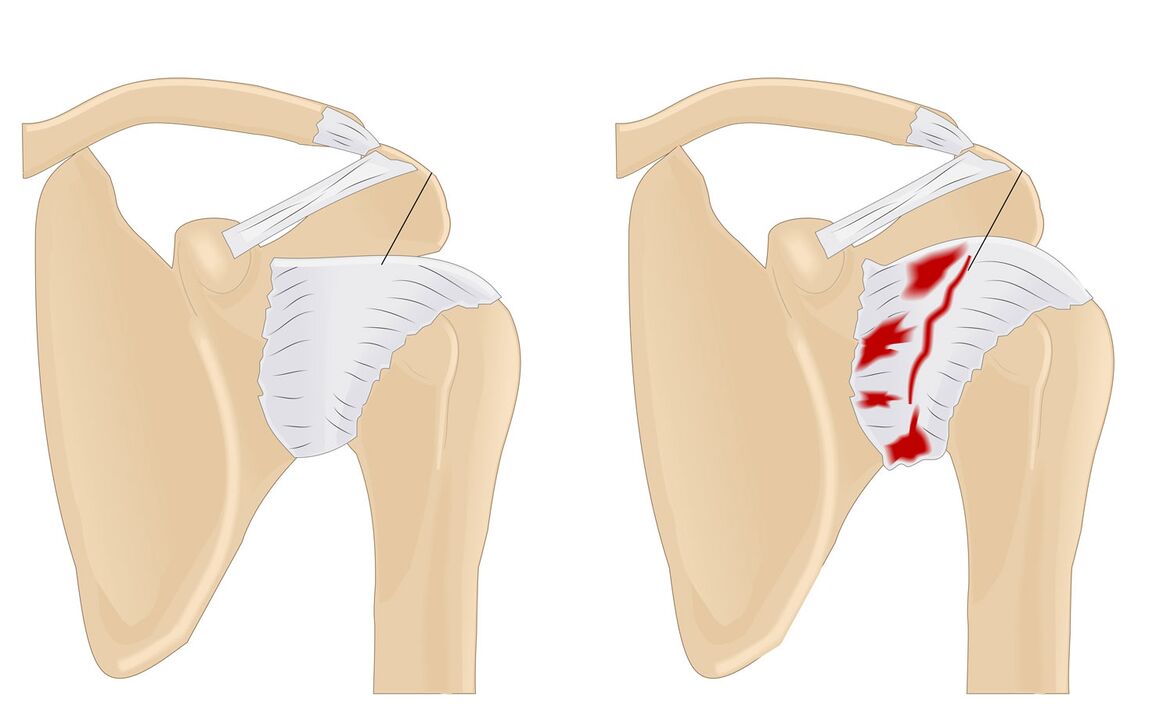
“As if I had no hands” is a popular expression used by people who are deprived of something important, such as a telephone or a planner.Meanwhile, it is worth noting that when the function of the shoulder joint is impaired and the arm gradually loses its former mobility, the phrase takes on a completely different meaning.Let's consider the symptoms of osteoarthritis of the shoulder joint and try to find out what treatment options exist today.
Osteoarthritis of the shoulder joint –What is this?
Osteoarthritis of the shoulder joint is a degenerative-dystrophic disease of the connective tissue of the joint, chronic in nature and manifested with stiffness, accompanied by pain of varying intensity.
The development of osteoarthritis of the shoulder joint is characterized by changes that occur in the synovial fluid (located within the joint).Lack of nutrients leads to degenerative-dystrophic (destructive) changes, due to which cartilage tissue loses its properties and becomes deformed.
Over time, the bone tissue located under the cartilage is exposed and, subject to negative effects, is deformed (marginal growths, osteophytes, are formed, causing limitation or complete loss of joint mobility).
An important fact is that it is extremely necessary to diagnose osteoarthritis of the shoulder joint in the early stages, when irreversibly destructive processes have not yet occurred in the tissues of the joint.Timely contact with a specialist and the start of treatment make it possible to stop the progress of pathological processes, ensuring the ability to maintain the functionality of the joint for many years.
Possible causes of osteoarthritis of the shoulder joint.
Among the most likely causes of osteoarthritis of the shoulder joint are:
- joint injuries;
- congenital developmental defects (in particular, dysplasia);
- various types of inflammation.
The shoulder is a mobile element of the skeleton of the human body.Due to the possibility of particularly free movement, the risks of injury to this particular joint are much higher.Dislocations are one of the most common causes, which is a prerequisite for the occurrence of osteoarthritis of the shoulder joint.
Also, the causes of osteoarthritis of the shoulder joint can be various types of surgical interventions, increased stress, sports and professional characteristics.
Considering osteoarthritis of the shoulder joint as a secondary phenomenon that develops against the background of inflammation caused by various diseases, it can be caused by:
- infections;
- metabolic/endocrine/autoimmune diseases;
- hereditary predisposition.
Main signs and symptoms of osteoarthritis of the shoulder joint.
Taking into account the clinical picture of the disease, it is worth noting that the symptoms of the initial stages of the development of pathological processes are weakly expressed.This is often the reason for the late diagnosis of osteoarthritis of the shoulder joint.
Symptoms of osteoarthritis of the shoulder joint include:
- pain (when pressing/abducting a limb);
- accompaniment of movements with a characteristic crunch;
- inactivity;
- local redness and swelling.
Any of the symptoms of osteoarthritis of the shoulder joint require the attention of a specialist.
As pathological processes develop, symptoms intensify.The earlier the disease is detected, the easier it will be to prevent destructive processes, preserving the functionality of the joint as much as possible.
Degree of development of osteoarthritis of the shoulder joint.
The intensity of the development of destructive processes, as well as the stage of pathological changes occurring within the joint, make it possible to distinguish various degrees of development of osteoarthritis of the shoulder joint.
Only the attending physician can accurately determine the existing degree of osteoarthritis by examining the results of an x-ray.Each degree has a number of characteristic symptoms of osteoarthritis of the shoulder joint.
Osteoarthritis of the shoulder joint 1st degree.
The initial stage of development of pathological processes.Osteoarthritis of the shoulder joint of the first degree lasts several years and is manifested by a change in the quality of intra-articular fluid.
The initial stage is characterized by symptoms such as:
- significant loss of joint resistance;
- pain during movements;
- Limited mobility accompanied by pain.
Timely treatment of grade 1 osteoarthritis of the shoulder joint has a positive prognosis.
Osteoarthritis of the shoulder joint 2 degrees.
The pain intensifies and can occur even in the absence of movement.
Osteoarthritis of the shoulder joint of the second degree is more noticeable for the patient and has clear symptoms, the manifestations of which are easily recognizable on an x-ray.
The group of symptoms also includes clicking when performing movements, as well as limited mobility, accompanied by acute pain.
Lack of treatment for stage 2 osteoarthritis of the shoulder joint has irreversible consequences, in particular, a complete loss of joint mobility.
Osteoarthritis of the shoulder joint 3rd degree.
Stage 3 osteoarthritis of the shoulder joint is accompanied by constant pain, pronounced limitation of movements and inability to move the arm back or raise it.
X-rays show clear signs of articular cartilage destruction.The surfaces of the adjacent bones are severely deformed.The treatment for stage 3 osteoarthritis of the shoulder joint is surgical intervention only, which involves replacing the joint with an endoprosthesis.
Types of osteoarthritis of the shoulder joint.
In medical practice, it is customary to distinguish several types of shoulder osteoarthritis:
- deforming (chronic form);
- post-traumatic (after bruises/sprains/fractures/ruptured ligaments);
- acromioclavicular (consequence of a joint injury);
- humeroscapularis (consequence of blows/falls).
The type of pathological process is determined by the treating doctor, taking into account the existing symptoms and probable causes of osteoarthritis of the shoulder joint.
Diagnosis of osteoarthritis of the shoulder joint.
Before starting treatment for osteoarthritis of the shoulder joint, it is important to accurately diagnose the type and degree of development of the disease.But which doctor treats osteoarthritis of the shoulder joint?
You can contact specialists such as rheumatologist, orthopedist, arthrologist for diagnosis and diagnosis.If this is not possible, simply make an appointment with a therapist, who will refer you to the appropriate specialist.
To make a diagnosis, a series of tests are performed to identify the presence of diseases that cause inflammation.In addition, an important step is examination and tests, which make it possible to confirm or refute the symptoms.
Another important diagnostic step is radiological examination in two projections.
A set of diagnostic techniques allows you to obtain an accurate picture and prescribe competent treatment for osteoarthritis of the shoulder joint.
Treatment of osteoarthritis of the shoulder joint.
Treatment of osteoarthritis of the shoulder joint is a long, multifaceted and rather complex process, which includes both pharmacological agents and behavioral methods.
Depending on the degree of development of pathological processes, both physiotherapeutic methods and the use of medications can be used as treatment.Let us consider in more detail the features of the treatment of osteoarthritis of the shoulder joint.
Physiotherapy as a method of treatment for osteoarthritis of the shoulder joint.
Physiotherapeutic methods are an excellent treatment for osteoarthritis of the shoulder joint in the initial stages of the development of pathology, as well as an element of complex treatment in advanced stages.
Among the physiotherapeutic methods of treating osteoarthritis of the shoulder joint, it is customary to distinguish:
- shock wave therapy - exposure of the affected joint to acoustic waves;
- laser therapy - allows you to temporarily abandon drug therapy;
- myostimulation - helps restore strength in the affected joint;
- phonophoresis - a combination of ultrasound and the use of a medicine (gel/ointment) helps eliminate pain;
- Ozone therapy is an adjuvant that helps reduce pain and speed up recovery.
Exercise therapy for osteoarthritis of the shoulder joint.
Physiotherapy for osteoarthritis of the shoulder joint is an important component of treatment, which involves:
- morning exercises;
- complex of dynamic movements;
- isometric gymnastics.
Each component of exercise therapy for osteoarthritis of the shoulder joint helps to improve the condition of the patient's body and helps to overcome pathological processes.
Gymnastics for osteoarthritis of the shoulder joint.
Physical exercises for the shoulder joint with osteoarthritis are an extremely important component of complex treatment, as they help slow down the progression of the disease.
Gymnastics for osteoarthritis of the shoulder joint strengthens the muscle structure, thereby reducing the load on the adjacent joint.
It is important to remember that under no circumstances should the joint be overloaded.All exercises must be performed under the supervision of a specialist.
Massage for osteoarthritis of the shoulder joint.
After physiotherapy and gymnastic exercises, it is recommended to perform a massage.
Massage for osteoarthritis of the shoulder joint helps to improve blood circulation and restore connective tissue.
It is worth noting that massage for osteoarthritis of the shoulder joint is possible only in the absence of acute pain, at the stage of reduction of inflammatory processes.
During the massage process, it is important to pay attention not only to the inflamed joint, but also to the neck area, as well as the forearm area.
Treatment of osteoarthritis of the shoulder joint with medications.
The key goal of treating osteoarthritis of the shoulder joint with drugs is to relieve pain and eliminate inflammatory processes, as well as improve the nutrition of the affected joint and create conditions for successful regeneration of connective tissue.
To achieve the main goal of treating the shoulder joint with medications, drugs of various groups are used.Let's look at some of them in more detail.
IMPORTANT!Only the treating doctor can prescribe medications for the treatment of osteoarthritis of the shoulder joint, depending on the formed picture of the disease.Self-medication can lead to irreversible consequences and disability.
NSAIDs in the treatment of osteoarthritis of the shoulder joint.
Nonsteroidal anti-inflammatory drugs (NSAIDs) have excellent anti-inflammatory and analgesic effects.They are prescribed in limited courses, the duration of which is determined by the degree of development of the disease and the individual characteristics of the patient.
Among the most effective drugs in this group it is worth highlighting the drug "Artradol".
Corticosteroids in the treatment of osteoarthritis of the shoulder joint.
Prescribed for severe pain such as intra-articular blockage.The products have a strong effect.The principle of operation is pain relief and prompt elimination of inflammatory processes.
Chondroprotectors in the treatment of osteoarthritis of the shoulder joint.
Prescribed to strengthen and restore connective tissues.They are effective only in stages 1 and 2 of the disease.
Treatment with chondroprotectors is a rather long process that requires constant attention.
Antispasmodics in the treatment of osteoarthritis of the shoulder joint.
Provides relief from muscle tension and pain in the affected joint area.They are a mandatory stage of treatment.
Ointments for osteoarthritis of the shoulder joint.
Preparations in the form of ointment/gel/cream are most suitable for osteoarthritis of the shoulder joint.They are easy to use and have a fairly small number of side effects.
Today there are a large number of drugs from various groups.
Diet nutrition as part of the complex treatment of osteoarthritis of the shoulder joint.
Medications for osteoarthritis of the shoulder joint, physiotherapy and various types of exercises are not all that is included in the complex treatment of the disease.Another important component is nutrition.
Diet and compliance with the principles of proper nutrition are an integral part of the complex treatment of osteoarthritis of any type.
Nutrition principles for shoulder osteoarthritis include:
- Limit or avoid foods that negatively affect joint function (milk, fatty meats, potatoes, eggplants).
- Inclusion in the diet of components that have a beneficial effect on the elasticity of the joints (olive/linseed oil).
- Fill your daily diet with antioxidants found in foods like olives, bananas, and cucumbers.
- Complete cessation of bad habits (drinking alcohol, smoking).
- Minimize fried, pickled, and very salty and sweet foods.
Answers to frequently asked questions
Is it possible to completely cure shoulder osteoarthritis?
Osteoarthritis of the shoulder joint is a chronic disease and therefore there is no talk of a complete cure.
This does not mean that it does not make sense to treat pathologies, because therapy allows us to restore joint mobility and improve quality of life.
What is the prevention of the disease?
Preventive measures include measures such as:
- systematic collection;
- visit your doctor;
- balanced diet;
- maintain optimal weight;
- refusal to abuse bad habits.
What complications can occur if you do not consult a doctor in a timely manner?
The prognosis for the development of pathological processes largely depends on the individual characteristics of the organism.
Among the most likely complications:
- irreversible joint deformation;
- destruction of joint tissues;
- complete loss of mobility;
- decreased quality of life.
Remember that your health is solely in your hands.
Take care of yourself and save the opportunity to enjoy every day you live!